
From field to menu
WHAT IS THE PURPOSE OF THE PROJECT?
With the project, we will establish an innovative teaching arena with sustainability, green food production and regenerative cultivation for vocational school students around the fields on a disused farm at Techcollege. The aim is to move teaching out of the classroom and into authentic settings, where students have the opportunity to work concretely with all links in the food chain – from field to menu. The field will function as an educational and professional laboratory, where students build skills to act on knowledge about sustainability and green transition through practical and sensory learning experiences. Interdisciplinary work is carried out between food education and agricultural education to strengthen craftsmanship, practical skills, the green mindset and the students' ability to act in relation to future climate challenges.
WHO IS BEHIND?
Techcollege
Copenhagen University College
Gardens for bellies
The Villum Foundation


WHICH COURSES ARE PARTICIPATING?
The following programs from Techcollege participate:
Gastronomist with a specialization in cooking
Nutritionist
Agriculture
THE PROJECT IN NUMBERS
Total project budget: DKK 3,335,843.28.
Techcollege's total budget: DKK 2,943,643.28.
*Of which self-financing: DKK 375,258.72.
Project period: 01.01.2026 – 31.12.2028
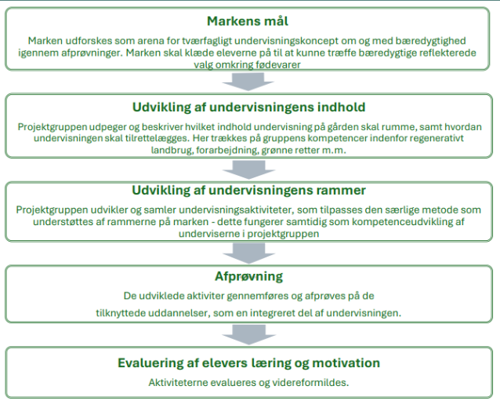
WHAT ACTIVITIES ARE PART OF THE PROJECT?
WHAT ARE THE EXPECTED RESULTS OF THE PROJECT?
At student level:
• Increased motivation and well-being among students through practice-based learning in authentic environments.
• Increased knowledge and ability to act sustainably.
• Improved sustainability, craftsmanship and collaboration skills.
• Greater power to act in relation to climate and green transition.
• Increased completion among students in the program.
At the educational level:
• Establishment of a new and innovative teaching format with sustainability at its core.
• Increased interdisciplinary cooperation between subject teachers and education programs.
• Increased quality and relevance of teaching in relation to the needs of the labor market.
At the community level:
• Contribution to the development of a new generation of professionals with green skills.
• Strengthened local roots and commitment through collaboration with business and local communities.